
::::::
Wonder in Sizhu
HostMali Liu
Topic
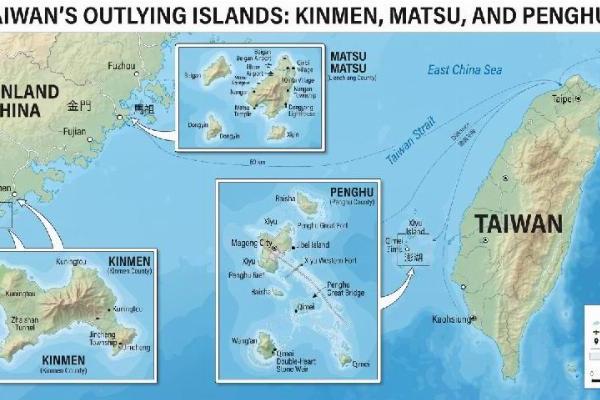
Echoes of the Borderline: A Sonic Journey Across Taiwan’s Offshore Islands (The special program for International Day of Peace)
Content
Echoes of the Borderline: A Sonic Journey Across Taiwan’s Offshore Islands
Introduction: The Sonic Geographies of the Frontier
As a musicologist and a global citizen tuned to the echoes of the world, I believe geography is marked not merely by map lines, but by the resilient heartbeat and voices of human survival. When cannons fall silent, what lingers in the air? This question inspires a sonic journey across Taiwan’s offshore islands—not as static military relics, but as living resonators of memory, trauma, and peace.
Islands situated at geopolitical fault lines have historically been defined by conflict and division. Yet, through oral history, cultural revitalization, and traditional music, these isolated outposts transform traumatic legacies into enduring sanctuaries of global harmony. This project explores three island groups—Kinmen, Matsu, and Penghu—offering a universal message that true peace is a conscious human choice to hold onto compassion amidst fear.
Movement I: Kinmen — The Architecture of War and Memory
Situated at the doorstep of Xiamen, Kinmen lies just three kilometers away from the mainland. For decades, this span became the ultimate frontline of the Cold War, a heavily fortified island of bunkers and artillery.
1. The Weight of Distance and Time
2. Orchestral Metamorphosis and Sanctuaries
Movement II: Matsu — Subterranean Fortresses and Cultural Rebirth
Matsu is defined by the fierce isolation of its granite archipelago. Hallowed out with subterranean docks like the North Sea Tunnel during military administration, the islands developed a unique Fuzhou-speaking community amid the choreography of wartime anxiety.
1. Theater and Contemporary Art
2. Comprehensive Marine Culture
Movement III: Penghu — Maritime Rhythm and the Sanctuary of Peace
In Penghu, the ocean dictates the rhythm of survival. Conductor Chang Yang notes how music bridges offshore islands to transcend political divides, while Cultural Bureau Director Chen Yu-yun guides listeners through double-ring stone weirs (shih-hu). Through "Bao-ge" folk songs, music association leader Hsu Sheng-wen uncovers the raw soul of maritime people whose spirits belong to the open sea.
Conclusion: Art, Memory, and Global Harmony
Once shaped entirely by war, Kinmen, Matsu, and Penghu now stand as ultimate sanctuaries of peace. As a sonic documentarian, my quest maps a sanctuary of peace through sound. Peace is never accidental; it is the choice to embrace one another with compassion. May the voices of these islands become an unquenchable light for the International Day of Peace.
Program Credits & Metadata
Project Title: Echoes of the Borderline: Island Sanctuaries of Peace
Producer / Narrator: Dr. Mali Liu
Broadcasting Organization: Taipei Broadcasting Station
劉長遠 — 《海印鐘聲》 (The Bells of Haiin Temple by Liu Chang-yuan) 蘇文慶 — 《風獅爺傳奇》 (The Legend of the Wind Lion God by Su Wen-cheng) 朱雲嵩 — 《神遊浯州憶金城》 (Traveling Across Time to the Old Kinmen by Zhu Yun-song) 李哲藝 — 《馬祖世紀風情畫—鋼琴協奏曲》 (Matsu Soundscapes: A Century of Music — Piano Concerto by Lee Che-yi) 朱雲嵩 — 《Pescadores˙浪行未央》 (Pescadores: The Endless Voyage by Zhu Yun-song)







LIVE